
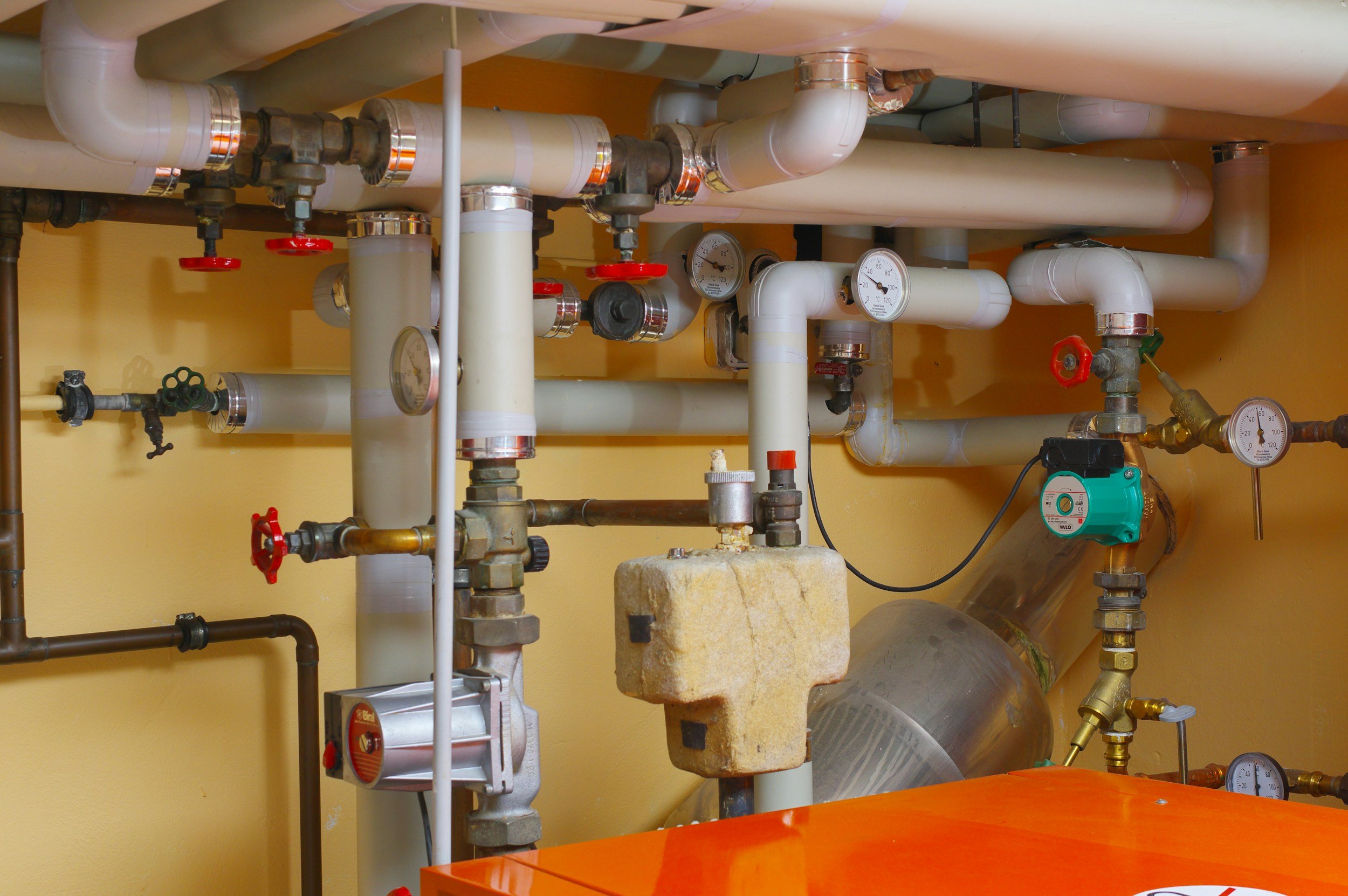
Choosing the right hot water system is an important decision when extending, renovating or building a home. The system you install will affect your comfort, energy bills, available space and even your property’s future compatibility with renewable technologies.
From compact combi boilers to unvented cylinders and heat‑pump‑ready systems, each option has advantages depending on your home and lifestyle. This guide explains the most common hot water systems used in UK homes, how they they work and what to consider before making your choice.
Combi Boilers
Combination (combi) boilers are the most common heating system found in modern UK homes. They heat water directly from the mains whenever a hot tap is opened, removing the need for a separate hot water cylinder.
Advantages
- Compact and space‑saving.
- No hot water storage cylinder required.
- Hot water available on demand.
- Lower installation costs in many homes.
Disadvantages
- Limited hot water output if several taps or showers are used simultaneously.
- Performance depends on incoming mains water pressure.
- Less suitable for larger households.
Best Suited To
- Apartments.
- One‑to‑three‑bedroom homes.
- Smaller households with modest hot water demand.
System Boilers
System boilers work with a separate hot water cylinder but do not require a cold‑water storage tank in the loft. The boiler heats stored water which can then supply multiple outlets simultaneously.
Advantages
- Good performance where several bathrooms are used at once.
- Compatible with renewable technologies such as solar thermal.
- No loft tank required.
Disadvantages
- Requires space for a hot water cylinder.
- Slightly larger installation footprint than a combi boiler.
Best Suited To
- Medium‑sized homes.
- Families.
- Homes with two or more bathrooms.
Conventional (Regular) Boilers
Conventional boilers, sometimes called regular or heat‑only boilers, use both a hot water cylinder and a cold‑water storage tank. Although less common in new homes, they remain suitable for certain larger properties.
Advantages
- Excellent for properties with high simultaneous hot water demand.
- Compatible with traditional heating systems.
- Can integrate with solar thermal systems.
Disadvantages
- Requires more space.
- Additional loft tank required.
- Generally less efficient than modern alternatives if poorly insulated.
Best Suited To
- Larger homes.
- Older properties.
- Homes with existing conventional heating systems.
Unvented Hot Water Cylinders
Unvented cylinders store mains‑pressure hot water, providing excellent flow rates throughout the property. They are commonly paired with system boilers or heat pumps.
Advantages
- High water pressure.
- Excellent performance for multiple bathrooms.
- No cold‑water storage tank required.
- Well suited to renewable heating systems.
Disadvantages
- Requires specialist installation.
- Annual servicing recommended.
- Additional safety devices required.
Best Suited To
- Large family homes.
- Properties with multiple bathrooms.
- Homes expecting high simultaneous water demand.
Choosing the Right System
The best hot water system depends on several factors.
Household Size
Larger households generally require greater hot water storage or higher flow rates than smaller households.
Number of Bathrooms
Multiple bathrooms increase simultaneous demand. A combi boiler may struggle where several showers are used at the same time.
Available Space
Consider whether your property has room for:
- A hot water cylinder.
- An airing cupboard.
- A utility room.
- A dedicated plant room.
Smaller homes often benefit from compact combi boilers.
Energy Efficiency
Modern condensing boilers, well‑insulated cylinders and heat‑pump systems can significantly reduce energy consumption. Future energy costs should be considered alongside installation costs.
Future‑Proofing
If you’re planning to install renewable technologies later, choose a system compatible with:
- Air source heat pumps.
- Ground source heat pumps.
- Solar thermal collectors.
- Solar photovoltaic (PV) systems where immersion heating may be used.
Where Should the System Be Installed?
The location of your heating system can affect efficiency, maintenance and future flexibility.
Combi Boilers
Common locations include kitchens, utility rooms and boiler cupboards. Wall‑mounted units minimise floor space.
Hot Water Cylinders
System boilers and unvented cylinders are commonly located within airing cupboards, utility rooms or plant rooms. Adequate clearance should always be provided for future servicing.
Conventional Systems
Traditional boilers may require loft space for cold‑water storage, separate airing cupboards and additional pipework. If located within roof spaces, tanks and pipework should be insulated against frost.
Flue Design
Boiler flues must comply with both the manufacturer’s instructions and the Building Regulations.
Horizontal Flues
These usually terminate through an external wall. Clearances from windows, doors, air vents and boundaries must follow the appliance manufacturer’s installation instructions.
Vertical Flues
These pass through the roof and are often used where horizontal discharge is not practical. Roof penetrations must be weather‑proofed correctly.
Condensate Pipes
Modern condensing boilers produce condensate which must discharge safely. External condensate pipes should have adequate falls, be insulated where exposed and minimise the risk of freezing during winter.
Installation Tips
Good system design improves both efficiency and reliability. Consider locating cylinders close to bathrooms, keeping hot water pipe runs short, insulating primary pipework, allowing sufficient maintenance access and positioning renewable technologies to minimise pipe lengths.
Maintenance and Safety
Regular servicing helps maintain efficiency and safety. Typical recommendations include annual boiler servicing, checking expansion vessels and pressure‑relief valves, servicing unvented cylinders by qualified engineers and installing carbon monoxide alarms near gas appliances. Unvented cylinders must be installed by engineers qualified to work on G3 unvented hot water systems.
Which System Is Best?
| System | Best For | Space Required |
|---|---|---|
| Combi boiler | Apartments and smaller homes | Low |
| System boiler | Medium‑sized family homes | Medium |
| Conventional boiler | Larger older properties | High |
| Unvented cylinder | Homes with multiple bathrooms | Medium |
There is no single “best” solution; the right choice depends on your property’s size, hot water demand, available space and long‑term plans.
Planning Permission and Building Regulations
Replacing an existing boiler does not normally require planning permission. However, Building Regulations may apply where work includes new heating systems, new flues, structural alterations, extensions, loft conversions, or new plant rooms. Heating systems must comply with Part L (Conservation of Fuel and Power) and, where relevant, Part G (Sanitation, Hot Water Safety and Water Efficiency).
For more detail see the guide “Planning Permission vs Building Regulations: What’s the Difference?”.
Planning a Home Extension or Renovation?
If you’re extending or renovating your home, consider your heating and hot water system at the design stage. The company’s Planning Drawings service helps homeowners create layouts that accommodate plant rooms, utility spaces and future renewable technologies. Building Regulations Drawings provide the detailed technical information needed for Building Control approval, including heating layouts, insulation, ventilation and drainage coordination.
Ready to discuss your project? Contact us today for a free, no‑obligation quotation.
Disclaimer: This article is for general informational purposes only and does not constitute legal or professional advice. The most suitable heating and hot water system depends on the specific property, household requirements and local conditions. Heating installations should always be designed and installed by appropriately qualified professionals in accordance with the Building Regulations and manufacturer guidance.