
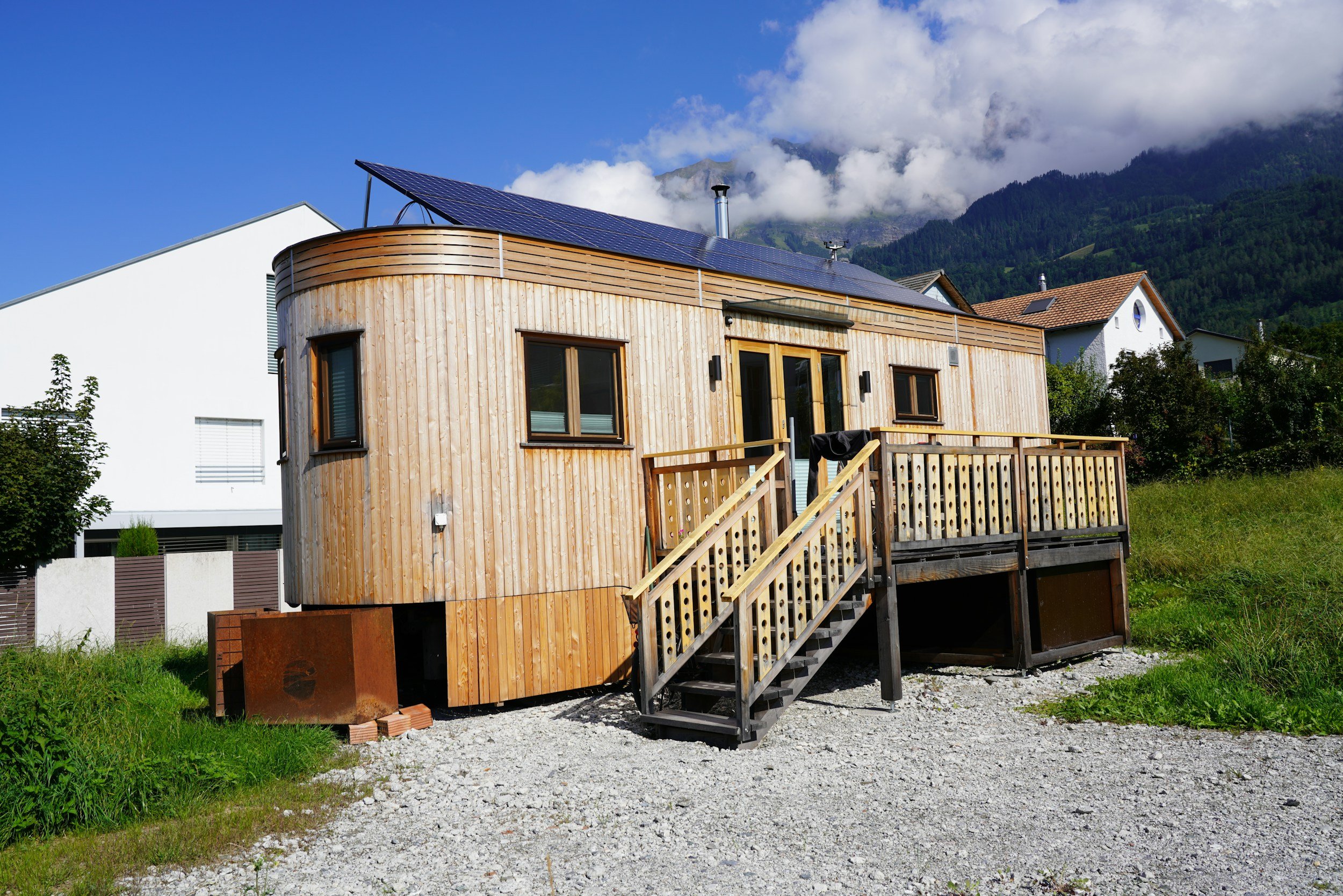
One of the most common questions homeowners ask is:
“Can I build a garden room with a bedroom without planning permission?”
The answer is more nuanced than many people realise.
Under Permitted Development Rights, you can often build a garden outbuilding without planning permission. However, those rights do not allow the outbuilding to be used as a separate self‑contained dwelling.
There is, however, another legal route that is frequently misunderstood: the caravan legislation.
If a garden structure legally qualifies as a caravan rather than a building, different planning rules may apply.
This guide explains how the caravan rules work, when overnight accommodation may be lawful, and the important limitations every homeowner should understand.
Important: This article relates to planning law in England. Every case depends on its individual facts, and professional advice should always be obtained before purchasing or installing a garden lodge.
Can You Sleep in a Garden Room?
Many people assume the answer is simply “no.”
In reality, overnight sleeping is not automatically prohibited.
The crucial planning issue is how the structure is used, rather than simply whether it contains a bed.
Planning law distinguishes between:
- An outbuilding used incidentally to the enjoyment of the main house.
- A self‑contained dwelling capable of independent occupation.
The second almost always requires planning permission.
What Do Permitted Development Rights Allow?
Most houses benefit from Permitted Development Rights, allowing garden outbuildings without planning permission, provided certain limits are met.
These generally include restrictions on:
- Size.
- Height.
- Location.
- Overall garden coverage.
However, the legislation is clear that these buildings must be incidental to the enjoyment of the dwellinghouse.
Typical incidental uses include:
- Home offices.
- Gyms.
- Studios.
- Games rooms.
- Garden storage.
- Hobby rooms.
Our guide Permitted Development Rights Explained: What Can You Build Without Planning Permission? explains these rules in more detail.
Why Sleeping Causes Confusion
A common myth is that having a bedroom automatically requires planning permission.
That isn’t entirely correct.
Occasional overnight accommodation for family members or guests does not necessarily mean an outbuilding has become a separate dwelling.
Instead, planning authorities usually look at the overall use of the building.
Questions often include:
- Does it function independently?
- Does it contain all the facilities needed for day‑to‑day living?
- Could someone live there permanently without relying on the main house?
These questions often carry more weight than whether the building simply contains a bed.
The Caravan Rules
The position changes where the structure legally qualifies as a caravan.
The definition comes primarily from:
- The Caravan Sites and Control of Development Act 1960.
- The Caravan Sites Act 1968.
A caravan is broadly defined as a structure:
- Designed or adapted for human habitation.
- Capable of being moved as a whole or in sections.
- Meeting the statutory size limitations.
Many modern garden lodges are specifically designed to satisfy these legal requirements.
Why Does This Matter?
If a structure is legally a caravan, placing it within the residential curtilage of a house is not always treated in the same way as constructing a permanent building.
In certain circumstances, planning permission may not be required provided the caravan remains incidental to the enjoyment of the main dwelling.
This distinction explains why many manufacturers advertise:
- Garden lodges.
- Granny annexes.
- Modular garden rooms.
- Twin‑unit lodges.
as being capable of installation without conventional planning permission.
However, every site and every use must still be assessed individually.
Can You Sleep in a Caravan Within Your Garden?
Potentially, yes.
Provided the caravan:
- Is located within the residential curtilage.
- Is genuinely incidental to the main house.
- Is occupied by members of the household or their guests.
- Does not become an independent dwelling.
Occasional overnight accommodation is often compatible with incidental residential use.
That is very different from creating a second home within the garden.
What Counts as Incidental Use?
Although there is no exhaustive legal definition, examples may include:
- Visiting relatives staying overnight.
- Guest accommodation.
- Occasional use by family members.
- A home office with occasional overnight use.
The more independent the accommodation becomes, the greater the planning risk.
Planning authorities may become concerned where the structure includes:
- Permanent occupation.
- Separate utility accounts.
- Independent postal addresses.
- Exclusive kitchen and bathroom facilities.
- Separate tenancy arrangements.
Each case is assessed on its own facts.
What Makes a Structure a Caravan?
To qualify under the legislation, the structure generally needs to:
- Be capable of transportation.
- Be delivered as one unit or assembled from no more than two sections.
- Remain physically capable of being moved.
- Comply with the statutory maximum dimensions.
Many purpose‑built twin‑unit lodges have been designed specifically around these requirements.
Certificate of Lawful Development
Because caravan law can be complex, many homeowners apply for a Certificate of Lawful Development (LDC) before installation.
An LDC can confirm whether the proposed development or use would be lawful.
It also provides valuable evidence if the property is sold in the future.
Our guide Using Fallback Positions to Strengthen Planning Applications explains how Certificates of Lawful Development can be strategically useful in a range of planning situations.
Important Limitations
The caravan rules should not be viewed as a loophole allowing unrestricted residential development.
Several important limitations remain.
It Must Not Become a Separate Dwelling
Using the structure as an independent home will usually require planning permission.
Factors suggesting separate residential use may include:
- Long‑term occupation.
- Independent cooking facilities.
- Separate utility connections.
- Rental to third parties.
Article 4 Directions
Some properties have restricted Permitted Development Rights through Article 4 Directions or planning conditions.
Professional advice should always be obtained before relying on caravan legislation.
Holiday Lets
Using a garden lodge as an Airbnb or holiday accommodation may require planning permission and could involve additional licensing or tax considerations.
Practical Tips
If you’re considering a caravan‑style garden lodge:
- Choose a supplier experienced with caravan legislation.
- Retain documentation showing how the structure was delivered.
- Avoid unnecessary permanent foundations.
- Consider obtaining a Certificate of Lawful Development.
- Seek professional planning advice before installation.
Small decisions during the design stage can significantly reduce planning risk.
How Draw & Plan Can Help
At Draw & Plan, we regularly advise homeowners on whether a proposed garden building should be treated as an outbuilding under Permitted Development Rights, a caravan under the relevant legislation, or whether planning permission is likely to be required.
Our Planning Drawings service includes advice on Permitted Development, Certificates of Lawful Development and full planning applications, helping homeowners choose the most appropriate route before construction begins.
For independent guidance, you may also find the Government’s Permitted Development Rights for Householders: Technical Guidance and the Planning Portal guide to Outbuildings useful.
Ready to discuss your project? Contact us today for a free, no‑obligation quotation.
Further Reading